
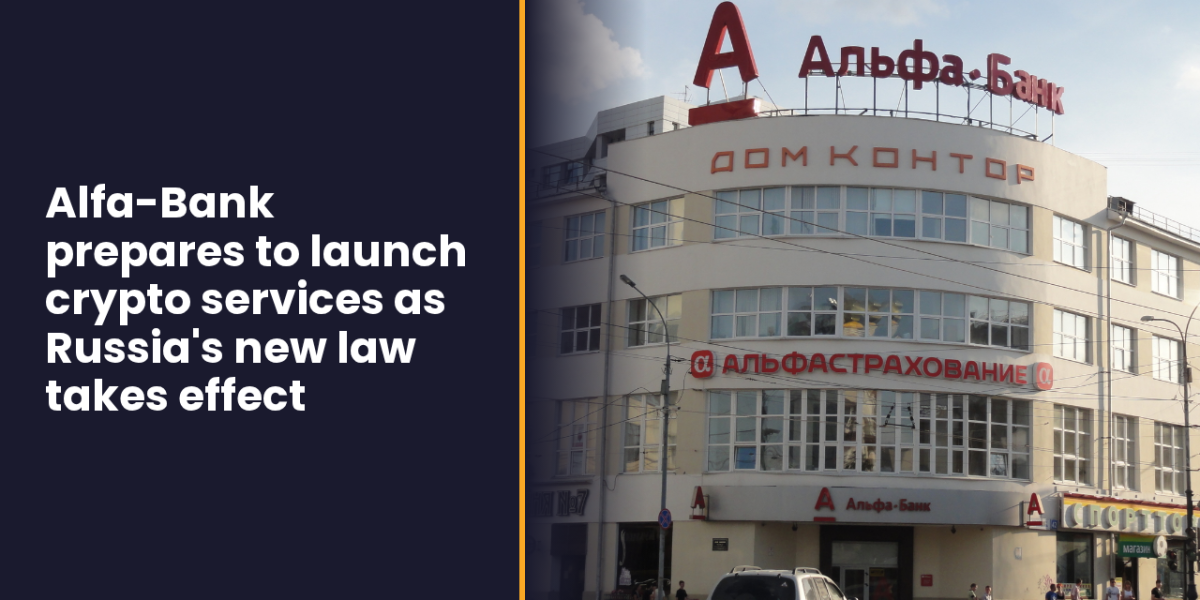
Russia’s largest private bank, Alfa-Bank, is preparing to launch digital asset services following the upcoming implementation of the country’s new cryptocurrency law. The bank plans to operate as a regulated digital asset custodian, which will enable it to securely store cryptocurrencies for both customers and businesses.
Dmitry Vitman, Chief Operating Officer of Alfa-Bank, stated, “Alfa-Bank plans to offer various services related to digital assets. First and foremost, we need to create our own digital depository.” In addition to custody services, Alfa-Bank aims to introduce blockchain-based investment products to attract international investors and enhance its position in the global digital asset market.
The launch of these services is contingent upon the official enactment of Russia’s new cryptocurrency legislation. The bill has received final approval from the State Duma and is set to take effect on September 1. Additional regulations are expected to be finalized by early November.
Vitman noted that the new legal framework could eventually facilitate retail crypto brokerage services utilizing both Russian and foreign infrastructure. However, he anticipates that significant liquidity in Russia’s cryptocurrency market will develop gradually, with stronger market activity likely emerging by late 2027.
Alfa-Bank is not the only institution making moves in the cryptocurrency sector. Sberbank, Russia’s largest lender, has announced its intention to launch a regulated digital depository and integrate a built-in crypto wallet into its Sberbank Online and SberInvestments applications. This rollout is expected to be completed by December 1, coinciding with the new law.
Other banks, including T-Bank and VTB, along with the Moscow Exchange, are also preparing to offer similar crypto custody and trading services. If the rollout proceeds as planned, over 100 million Sberbank users could gain direct access to crypto through their banking apps without the need for traditional crypto exchanges.
This coordinated initiative by Russia’s major financial institutions represents a significant step toward regulated digital asset adoption and may facilitate widespread availability of crypto services across the banking sector before the end of 2026.