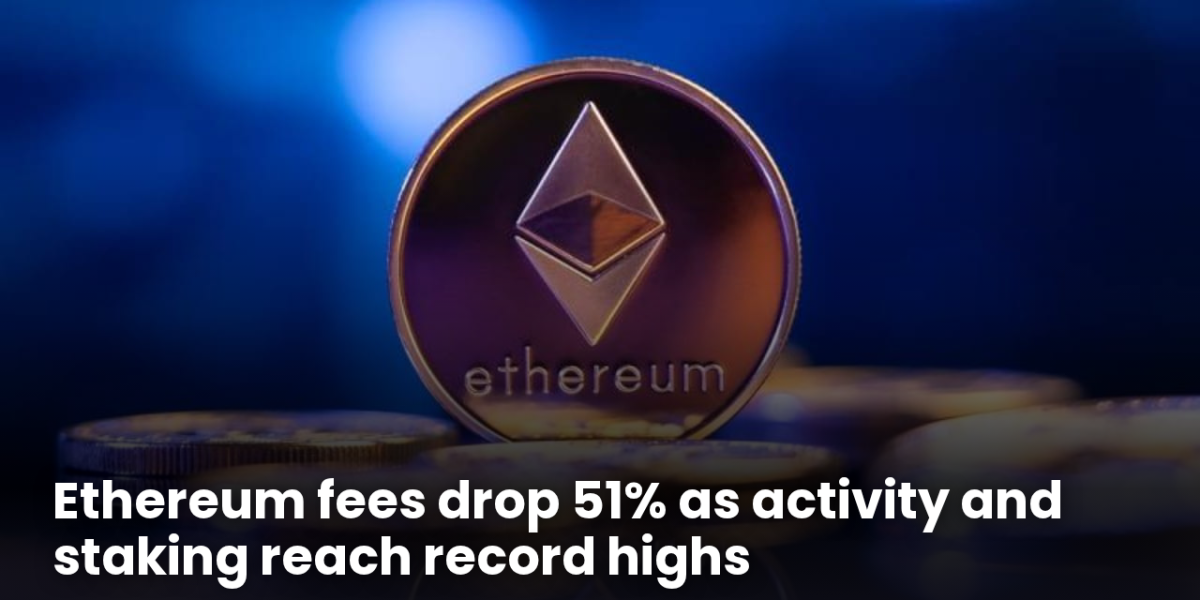
Ethereum (ETH) network fee revenue fell 51% year-on-year to roughly $64 million in the second quarter, even as transaction activity rose and staking climbed to a record, according to a new Bitwise report.
The decline reflected cheaper and more abundant blockspace rather than fading interest, the asset manager said. Measured in ETH, quarterly revenue actually rose for the first time in over a year.
Ethereum revenue reached about $131 million in the second quarter of 2025. A year later, it stood near $64 million, a sharp drop in dollar terms.
Ethereum processed 203.9 million transactions in the quarter, up from 121.1 million a year earlier. Throughput rose to 26 transactions per second, from 15. This came as Ethereum’s block gas limit increased to 60 million.
“The divergence between revenue and activity is the theme of the quarter. While fees fell, usage climbed,” the report read.
Researchers at Bitwise attributed the gap to protocol design. Networks made blockspace cheaper and more abundant, enabling users to pay less per transaction.
The USD figure also masked a shift beneath the surface. In ETH terms, revenue rose from 27,670 ETH in the first quarter to 31,166 ETH in the second quarter.
That marked the first quarterly increase in over a year. The dollar total fell mainly because ETH’s price weakened during the period.
Staking followed the same upward path. Active stake reached a record 40.2 million ETH, representing about 33% of total supply, amid continued institutional inflows.
The pattern extended beyond Ethereum. Solana (SOL) processed 9.8 billion non-voting transactions, near its all-time high, while dollar revenue fell.
Avalanche (AVAX) handled 236 million transactions on its C-Chain, up from 58 million a year earlier. Lower congestion, not weaker use, brought fees down.