
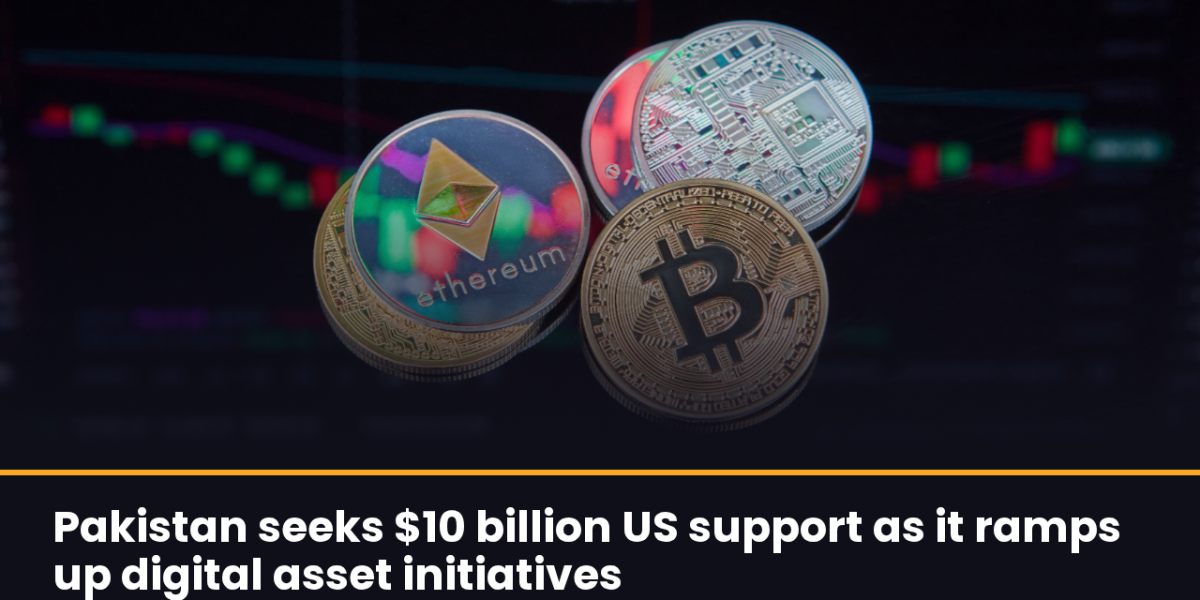
The government of Pakistan has sought a $10 billion Bilateral Exchange Stabilization Support Facility from the U.S. This request aligns with its efforts to improve forex reserves and bolster digital financing initiatives.
Finance Minister Muhammad Aurangzeb presented the proposal to U.S. Treasury Secretary Scott Bessent, asking for a facility of up to five years. The funds will help strengthen national reserves, support the Pakistani rupee, and reduce the need for emergency funding during market distress, as reported by Reuters.
The request coincides with Pakistan undergoing reforms linked to the International Monetary Fund (IMF) program while actively seeking additional external financing sources. Given the instability of global financing, authorities are exploring ways to enhance economic resilience beyond traditional creditors.
The proposal is part of Pakistan’s expanding strategy for digital assets. Earlier this year, the country partnered with World Liberty Financial to assess the feasibility of a stablecoin backed by the U.S. dollar and other blockchain applications. This partnership aims to improve international payments, increase remittance inflows, and enhance access to digital financial services.
Pakistan ranks as one of the fastest-growing markets for cryptocurrencies. Chainalysis identifies it among the top countries for grassroots cryptocurrency usage, driven by active participation from the public, remittances, and demand for swift transactions at low costs.
Experts assert that Pakistan’s aspirations in cryptocurrencies extend beyond financial technology innovations. The Observer Research Foundation indicates that Islamabad is increasingly leveraging collaborations in digital assets as part of its broader engagement with Washington, positioning crypto as a significant component of its economic diplomacy.
The proposed reserve facility and stablecoin partnership indicate a dual-track strategy by Pakistan: enhancing its financial safety net while investing in digital payment infrastructure to support long-term growth.
Global institutions have generally welcomed advancements in digital payments but continue to caution about associated risks. The IMF has noted that stablecoins could reduce costs and enhance efficiency in payments while promoting financial inclusion.
Furthermore, the IMF has observed that emerging markets are drawing more investments from non-bank financial institutions, creating new funding avenues but also exposing economies to rapid shifts in global capital.
The Bank for International Settlements (BIS) shares similar concerns, recognizing the benefits of tokenization and programmable finance but arguing that privately issued stablecoins lack the trust and stability necessary without robust oversight. The BIS advocates for regulated tokenized bank deposits and central bank money as a more stable foundation for future financial systems.
Pakistan’s request for U.S. financial support underscores the increasing interconnection between traditional macroeconomic policy and digital asset development.