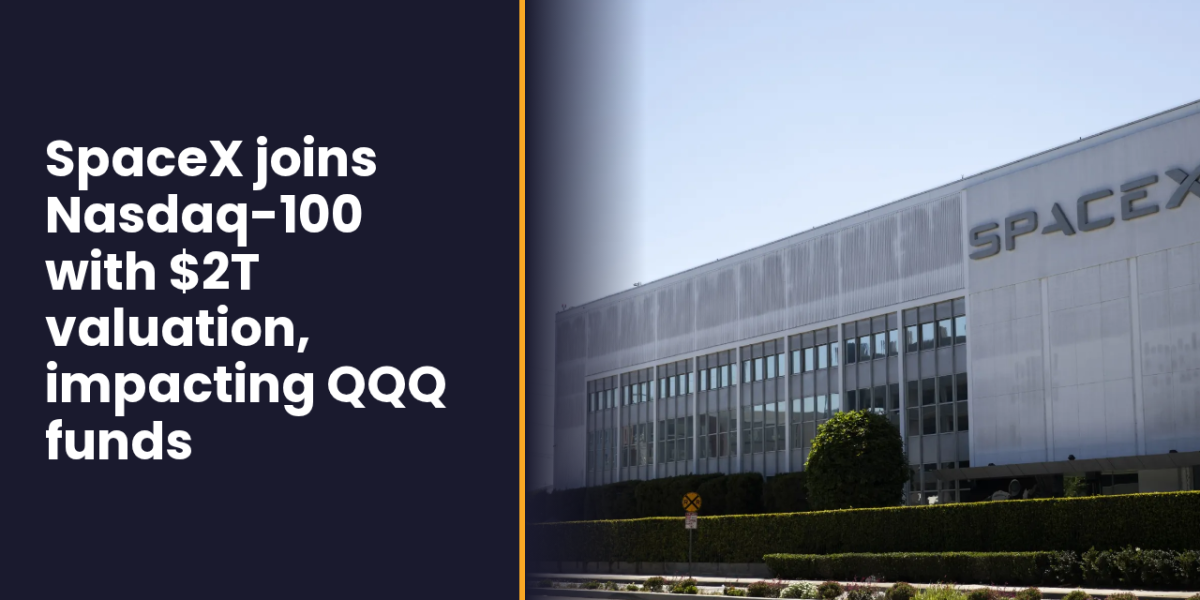
SpaceX entered the Nasdaq-100 on July 7, 2026, with a float-adjusted weight significantly lower than its $2 trillion valuation. This inclusion triggers mandatory buying obligations across passive funds indexed to the Nasdaq-100, including the Invesco QQQ Trust (NASDAQ: QQQ).
The company, known formally as Space Exploration Technologies (NASDAQ: SPCX), was added just 15 trading days following its IPO on June 12. Morgan Stanley, one of the underwriting banks for the IPO, simultaneously issued a $300 price target on SPCX, although the stock declined on its debut. This divergence highlights the tension now present in portfolios of QQQ.
SpaceX’s market capitalization positions it as the seventh-most valuable company globally. However, its weighting in the Nasdaq-100 is not based on total market cap but is calculated as a fraction of its float, which is approximately 5% of the total share count. This float-adjusted weighting reduces SpaceX’s initial index footprint compared to its headline valuation. The mechanics of how the float expands over the next 180 days will determine the pace at which passive funds must increase their exposure.
The Nasdaq-100 underwent changes to accommodate the rapid inclusion of mega-cap IPOs like SpaceX. Under the new rules, any company with a market cap at least equal to the 40th largest Nasdaq listing, currently around $121 billion, can be included after its 15th trading day. SpaceX exceeds this requirement by a factor of approximately 16.
Upon entering the Nasdaq-100, every passive fund indexed to it must buy shares in proportion to the assigned weighting, as mandated by their prospectus. This buying is mechanical and not subject to the fund manager’s discretion. SpaceX’s float-adjusted weight at entry is significantly less than what a typical $2 trillion company would carry, compressing the initial forced buying. However, this will increase in stages as insider lockups expire.
SpaceX’s tiered lockup structure allows for the release of 20% of early-release-eligible shares two days after the release of Q2 2026 earnings. An additional tranche will bring the total to 30% if SPCX trades at or above $175.50 per share. Full availability of early-release shares will occur on December 9, 2026, 180 days after the IPO. Elon Musk and select major shareholders are subject to a longer 366-day hold from May 20, the date of the Securities and Exchange Commission (SEC) Form S-1 filing. Each unlock event will increase the float, raise SpaceX’s float-adjusted Nasdaq-100 weight, and necessitate further passive buying from QQQ and similar funds.
Historical patterns for large-cap index additions indicate that forced passive inflows typically compress around the effective rebalance date, with sustained demand emerging afterward.